





April 30, 2026

Rack Attack Team
The Ultimate Rooftop Tent Buying Guide: Elevate Your Adventure
So, you’re ready to take your camping game to new heights literally. Whether you’re a seasoned overlander looking to streamline your setup or a weekend warrior tired of wrestling with ground tent poles in the mud, the rooftop tent (RTT) revolution has likely caught your eye.
But as you start browsing, you realize it isn’t just about picking a tent; it’s about understanding your vehicle’s limits, your lifestyle needs, and the engineering behind the gear. At RackAttack, we’ve spent over 25 years helping adventurers get road-ready. In this guide, we’re going deep into everything you need to know to make an informed investment in your home-away-from-home.
Watch Blake’s Take on Rooftop Car Tent Buying Guide
Rooftop Tent Comparison (Quick View)
| Tent Style | Example Model | Weight Avg. | Setup Time | Best For |
|---|---|---|---|---|
| Hardshell (FRP) | iKamper SkyCamp 3.0 | 125 - 165 lbs | ~60 Seconds | Speed, durability, & high-frequency use |
| Softshell (Traditional) | Thule Approach | 110 - 150 lbs | 5 - 8 Minutes | Budget, large sleeping footprint, & stargazing |
| Compact Hardshell | iKamper Mini | 125 lbs | ~60 Seconds | Short-bed trucks and compact crossovers |
A Brief History: From Safari Roots to Modern Luxury
Before we look at the high-tech fiberglass and aluminum shells of today, it’s worth looking back at where this all started. Many people assume rooftop tents are a modern influencer invention, but they’ve actually been around longer than your uncle’s vintage RV.
The 1920s: The Early Concepts
The first patents for vehicle-mounted sleeping quarters date back to the 1920s. These were rudimentary, heavy, and largely DIY affairs. However, the true commercial breakthrough happened in 1958. An Italian company called Autohome introduced the first commercially available models, designed specifically for safari-style adventures.
The Safari Era
In the mid-20th century, if you were traversing the African savanna or the Australian Outback, you didn't want to be on the ground. Between curious wildlife and uneven, rocky terrain, being six feet up offered a literal life-saving advantage. These early tents were built for pure utility sturdy canvas and heavy frames that could withstand the elements.
The Modern Evolution
As automobiles evolved from rugged utility vehicles into sleek, aerodynamic SUVs and crossovers, rooftop tents had to keep up. Today, the market has split into two primary philosophies: the sleek, aerodynamic hardshell and the versatile, classic softshell. We’ve moved from simple cots on a roof to luxury sleeping quarters with memory foam mattresses, LED lighting, and stargazing windows.
The Foundation: Understanding Your Roof Rack (The Safety First Section)
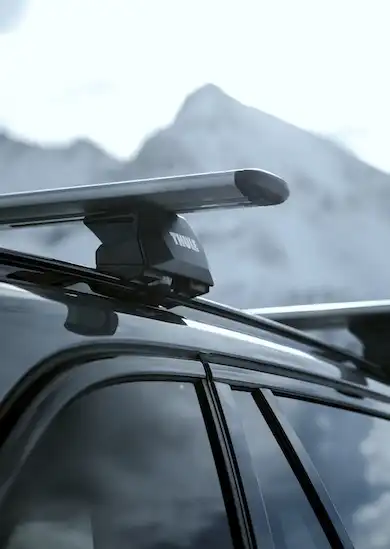
Before you buy a tent, you must understand the most critical part of your setup: your roof rack. It is a common misconception that if a rack fits your car, it can hold a tent. This is where we need to talk about engineering and weight limits.
Dynamic vs. Static Load Ratings
This is the most important distinction in the world of overlanding.
- Dynamic Load Rating: This is the amount of weight your rack can safely carry while the vehicle is in motion. Most standard aftermarket racks (like those from Thule or Yakima) are rated for roughly 165 lbs. If your tent weighs 150 lbs and your rack is rated for 165 lbs, you have 15 lbs of wiggle room for extra gear (like recovery boards or a shovel). Note: Never exceed this while driving, as it affects your vehicle’s center of gravity and braking distance.
- Static Load Rating: This is the weight the rack can support when the vehicle is parked. When you’re at the campsite and three people climb into the tent, you are well over 165 lbs. Is the roof going to cave in? No. As a general rule of thumb, the static load rating is usually 2 to 3 times higher than the dynamic rating. This accounts for the weight of the tent plus the occupants and their gear.
Checking Your Manual
Always refer to your vehicle’s owner’s manual. Some factory-installed flush rails or plastic crossbars are not designed for rooftop tents. At RackAttack, we always recommend upgrading to a high-quality aftermarket system to ensure your setup is roadworthy and safe.
Hardshell Rooftop Tents: The Speed Seekers
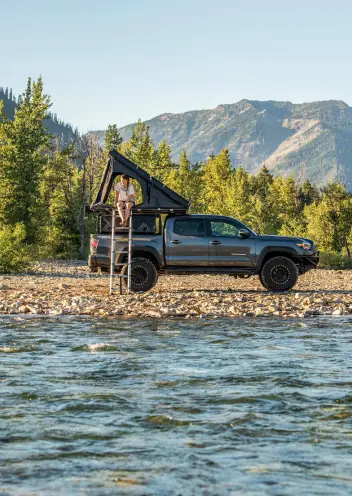
Hardshell tents are defined by their rigid outer lid (usually fiberglass, plastic, or aluminum) that encloses the tent fabric when closed. These are the luxury sports cars of the rooftop tent world.
The Pros of Hardshells
- Setup Speed: This is the biggest selling point. Most hardshells, like the iKamper SkyCamp 3.0, can be deployed in about 60 to 90 seconds. You simply undo a few latches, and gas-assisted struts do the heavy lifting.
- Durability: The hard outer shell provides a shield against low-hanging branches and road debris while driving.
- Aerodynamics: They sit flatter on the roof, which means less wind noise and better fuel economy (or battery range for EVs).
The Cons of Hardshells
- Price: They are generally more expensive than softshells due to the materials used in the shell construction.
- Weight: Because of that rigid lid, they can be heavier, though brands like iKamper are changing that narrative.
Featured Brand: iKamper
Founded in 2012 by Soon Park, iKamper was born from a fascination with treehouses. Their original SkyCamp design famously raised $2.3 million on Kickstarter, proving there was a massive hunger for high-quality, innovative Rooftop tents.
Why we love the SkyCamp 3.0 Series:
FRP Shell: They use Fiber Reinforced Plastic. It’s a double-layered shell with insulation that keeps the tent quiet and temperature-controlled.
The Mini Innovation: For a long time, hardshells were too big for compact cars. The SkyCamp 3.0 Mini weighs only 125 lbs and fits perfectly on short-bed trucks or hatchbacks.
Mattress Technology: The 3.0 series features a 2.5-inch polyfoam mattress. If you go for the Deluxe version, you get an inflatable mattress that compresses even further, allowing you to leave all your sleeping bags and pillows inside the tent when you close it.
Softshell Rooftop Tents: The Traditional Adventurer
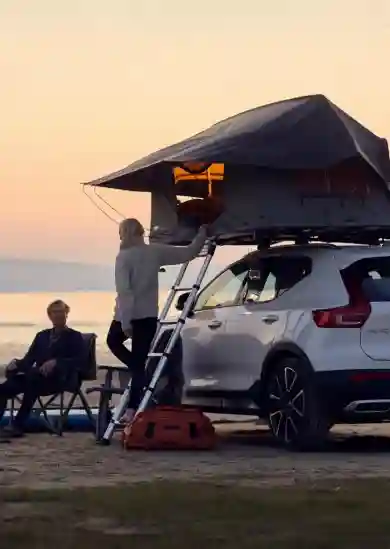
Softshell tents are the classic fold-out style. They look like a thick book on your roof and are covered by a heavy-duty PVC travel cover when not in use.
The Pros of Softshells
- Affordability: If you are just getting into rooftop camping, a softshell is much easier on the wallet.
- Footprint: Because they fold in half, they take up less space on your roof rack but often provide a larger sleeping area when opened.
- Replaceable Parts: The waterproof travel bag is a separate piece. If you snag it on a branch, you can simply replace the bag rather than repairing a cracked shell.
The Cons of Softshells
- Setup Time: You have to remove the cover, unzip it, and manually fold the tent out. It usually takes 5–10 minutes, still faster than a ground tent, but slower than a hardshell.
- Weather Wear: While the covers are durable, they are exposed to the sun and rain constantly, meaning they may need more maintenance over a decade of use.
Featured Brand: Thule
Thule has been a household name since 1942. While they started making fishing traps in Sweden, they are now the global gold standard for mobile gear transport. Their foray into rooftop tents has brought a level of sleek engineering that the industry had never seen.
The Thule Approach:
The Approach is one of the coolest tents on the market right now.
Modern Aesthetics: It moves away from the boxy look of old softshells for a more modern, faceted shape.
Stargazing Windows: The windows on the Approach are massive. They are designed specifically for maximum airflow and views of the night sky.
Weight Variance: Small: 110 lbs (Perfect for 1-2 people). Medium: 128 lbs. Large: 150 lbs (Great for families).
Choosing the Right Tent for Your Lifestyle
Now that you know the technical differences, how do you actually choose? Ask yourself these three questions:
1. How often will you use it?
If you are out every single weekend, the convenience of a hardshell is worth the extra money. If you only go out 3-4 times a year for a week-long trip, the softshell offers incredible value and more living room space.
2. What is your vehicle’s capacity?
If you drive a smaller vehicle like a Subaru Crosstrek or a Toyota RAV4, weight is your biggest enemy. You’ll want to look at the iKamper Mini or the Thule Approach Small. If you have a full-size truck with a bed rack, the sky is the limit.
3. Who is coming with you?
Don't just look at the person count (e.g., 3-person tent). Look at the actual dimensions. If you are 6'4", you need to ensure the interior length allows you to stretch out.
Pro Tip: We always tell our customers to come into a brick-and-mortar store. At RackAttack, we have over 40 locations. You wouldn’t buy a mattress for your house without laying on it, so don’t buy a rooftop tent without climbing inside. Feel the thickness of the mattress, test the zippers, and see how easy it is to climb the ladder.
Maintenance and Care: Protecting Your Investment
A rooftop tent is an investment often costing between $1,500 and $5,000. To make it last for 10+ years, follow these maintenance rules:
Never Store It Wet
The #1 killer of rooftop tents is mold. If it rains during your trip, you’ll have to pack the tent up wet to drive home. That’s fine but you must open it back up within 24 hours once you get home to let it air dry completely.
Season the Canvas
When you first get a new tent (especially softshells), it’s a good idea to season the fabric. Set it up in the driveway and hose it down. The water causes the threads to swell and seal the stitch holes, making the tent even more waterproof for your first real storm.
Check Your Bolts
Vibration from off-roading can loosen the mounting hardware over time. Every few trips, take a wrench and ensure the mounting brackets attaching the tent to your rack are still snug.
Final Thoughts: The Road Awaits
Rooftop tents aren't just a gear upgrade; they are a lifestyle shift. They give you the freedom to pull over at a trailhead, pop the top, and be asleep within minutes, safe from the damp ground and wandering critters.



